How Kangen Water Machines Work
Understanding the Technology Behind Kangen Water Machines
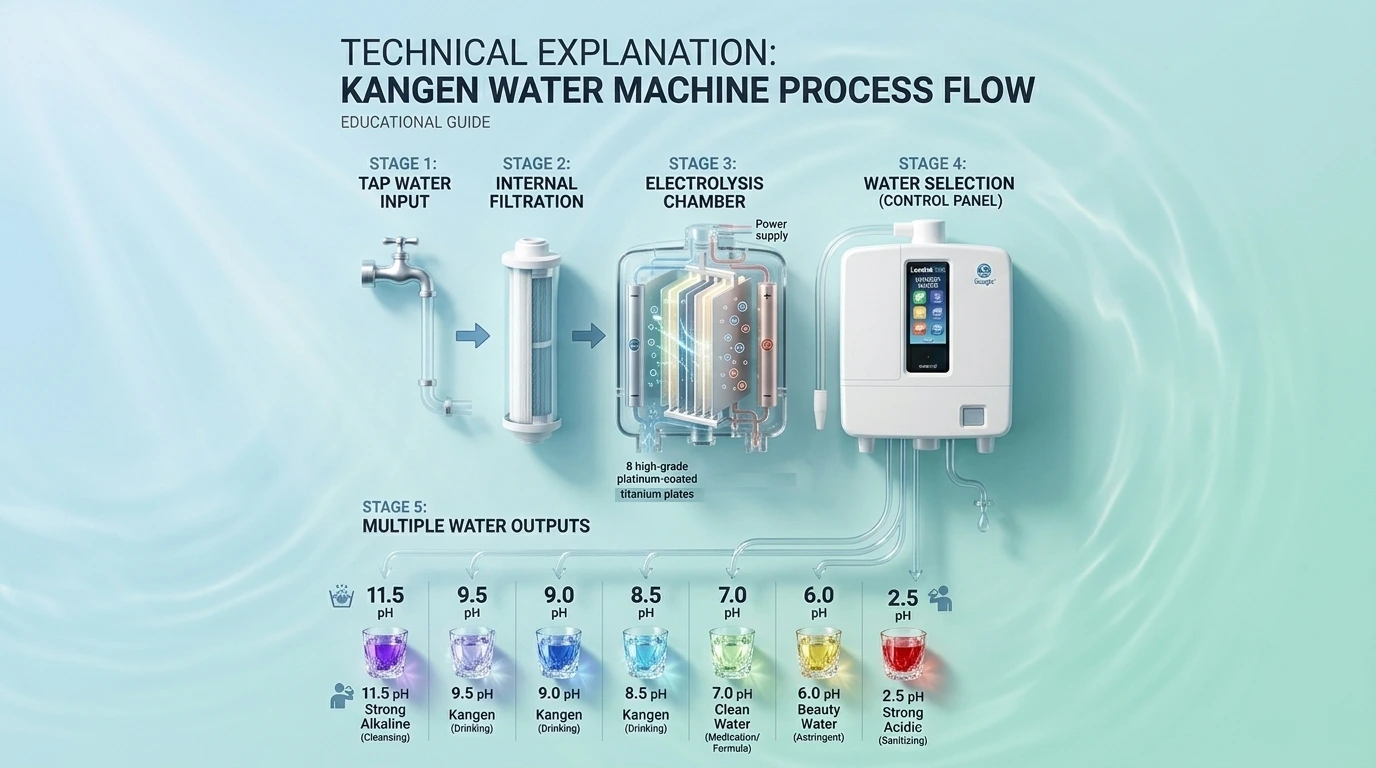
Kangen Water machines transform regular tap water into different types of ionized water through a precise and controlled electrolysis process. Rather than functioning as a simple water filter, a Kangen Water machine is a water ionization system designed to adjust water properties for different household applications while using the same incoming water source.
Understanding how the technology works helps you evaluate different models based on their design, capacity, and intended usage rather than marketing claims. This guide explains the complete process step by step.
The Water Ionization Process
Step 1: Water Filtration (Pre-Treatment)
Before ionization begins, incoming tap water passes through an internal filtration system. This stage helps reduce common impurities, including:
- Chlorine
- Odor-causing substances
- Sediments and suspended particles
The purpose of filtration is to prepare the water for the ionization process while helping protect the machine's internal components.
Filtration supports consistent performance and contributes to the long-term reliability of the electrolysis system.
Step 2: Electrolysis Chamber (Core Technology)
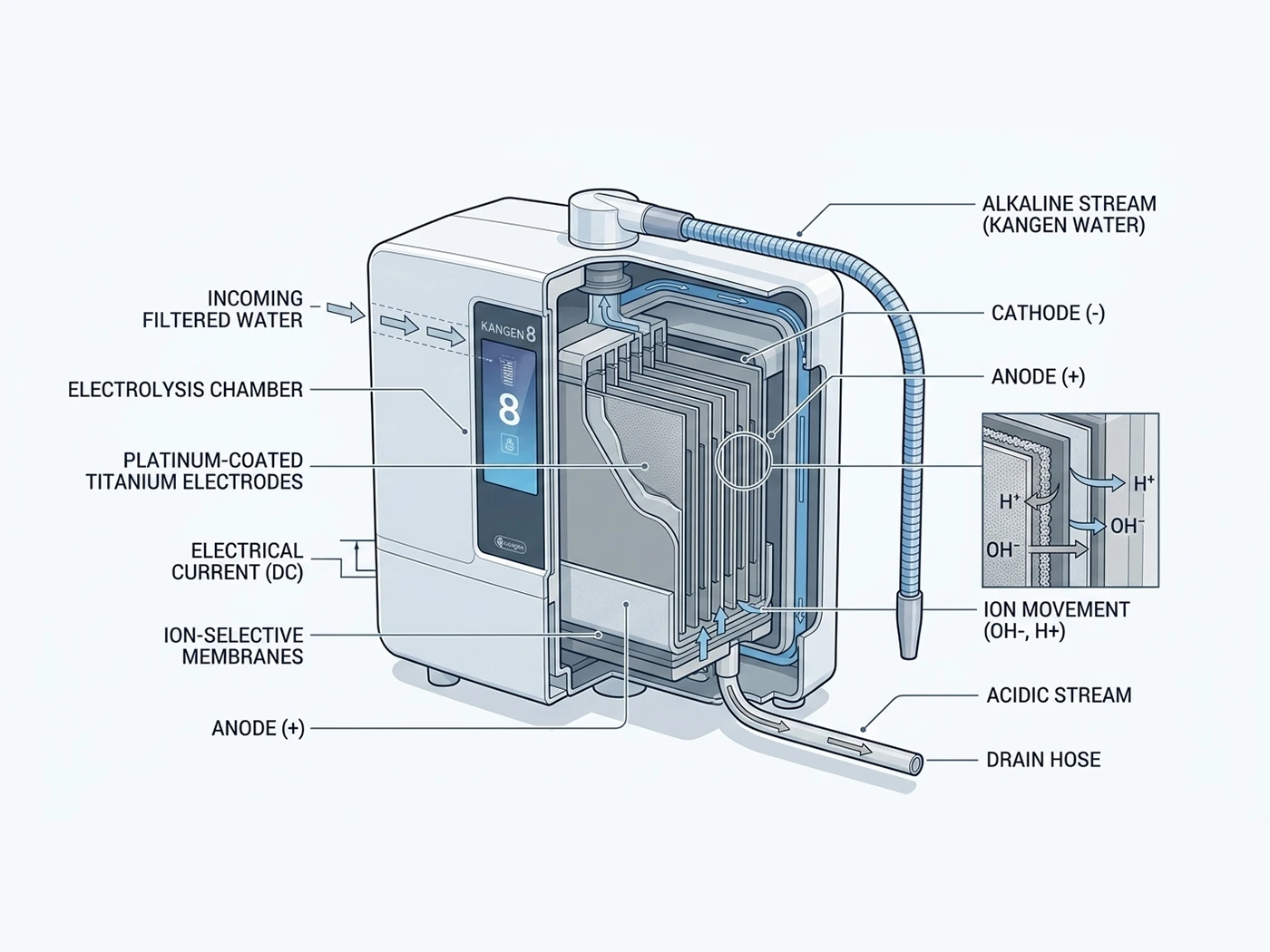
After filtration, water enters the electrolysis chamber—the core of every Kangen Water machine.
Inside the chamber are solid titanium electrode plates coated with platinum. When electrical current is applied, electrolysis begins.
During this process:
- Water is separated into alkaline and acidic streams.
- Dissolved mineral ions respond to the electrical charge.
- The machine adjusts the output according to the selected water setting.
The electrolysis chamber is the component responsible for producing different types of ionized water.
Step 3: pH Adjustment Through Ionization
During electrolysis, the water is separated into two primary streams:
- Alkaline water (higher pH)
- Acidic water (lower pH)
Users can select different output settings depending on the intended household application, such as drinking water or general cleaning purposes.
pH selection is intended for different usage applications and should not be interpreted as a medical or therapeutic function.
Step 4: Controlled Water Output
After ionization is complete, the selected water exits through the appropriate outlet.
Depending on the selected setting, the output may vary in:
- pH level
- Flow rate
- Intended household application
This allows one machine to produce multiple types of water without requiring separate filtration systems.
Key Components Inside a Kangen Water Machine
Although models differ in size and production capacity, they share the same core components:
- Multi-layer filtration system
- Electrolysis chamber
- Platinum-coated titanium electrode plates
- Digital control panel
- Water outlet selector
Each component performs a specific function, working together to provide reliable and consistent operation.
Choosing the Right Machine
Understanding Electrode Plate Count
One of the most common questions is whether more electrode plates make a meaningful difference.
The answer is yes—but not simply because of the number of plates alone.
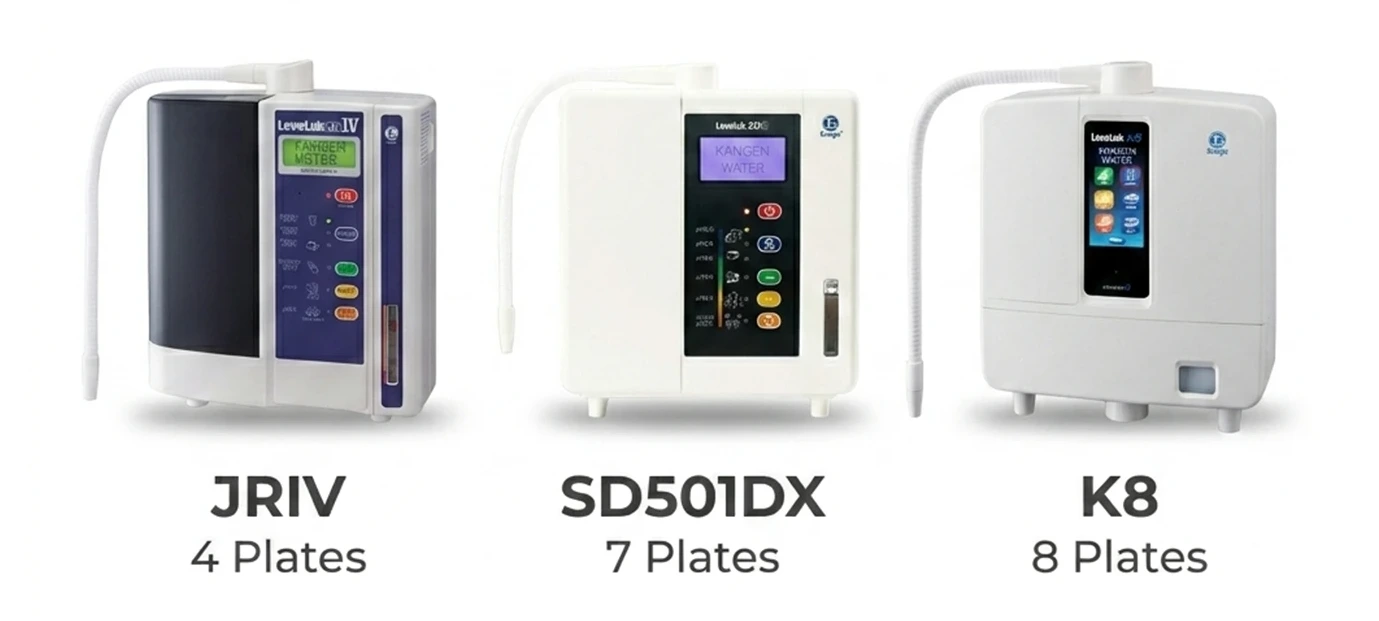
The electrode plates form the heart of the electrolysis chamber. In general, a larger number of plates provides a greater electrolysis surface area, allowing the machine to support higher water production and greater ionization capacity.
As a result, higher-capacity models are designed to:
- Produce larger volumes of ionized water.
- Maintain more consistent ionization performance during continuous or high-demand use.
- Better support households with higher daily water consumption.
Actual water characteristics—including pH, ORP, and dissolved hydrogen potential—are influenced by several factors, including source water quality, mineral content, flow rate, and machine settings. However, the machine's electrolysis capacity is one of the key factors that contributes to overall performance.
For this reason, 7-plate models such as the Leveluk SD501DX and 8-plate models such as the Leveluk K8 are generally recommended for most families, as they provide an excellent balance of production capacity, ionization capability, and long-term everyday performance. Lower-capacity models, such as the Leveluk JRIV, remain an excellent choice for individuals, couples, or households with relatively low daily water demand.
Ultimately, the best Kangen Water machine is the one that matches both your household's daily water usage and your long-term needs.
Residential vs Commercial Models
Kangen Water machines are designed for different usage environments.
Residential models are optimized for daily household use, while commercial models are built to support higher-volume and continuous operation.
Understanding the expected usage environment helps you select a machine that matches your actual water demand without purchasing more capacity than necessary.
Why Understanding the Technology Matters
Learning how Kangen Water machines work allows you to:
- Compare models more confidently.
- Understand differences in production capacity.
- Set realistic expectations based on your water source.
- Choose the most suitable machine for your household or business.
A basic understanding of the technology makes it easier to evaluate specifications and select the right model.
Related Guides
Continue learning with these guides:
- What Is Water Ionization?
- Types of Water Explained (pH Levels)
- DIY Installation Guide
- Compare Kangen Water Machines
Together, these resources provide a more complete understanding of Kangen Water technology and help you make an informed purchasing decision.
Final Overview
Kangen Water machines combine water filtration, electrolysis, and controlled output to produce multiple types of ionized water from a single tap water source.
While models differ in production capacity and intended usage, they all rely on the same electrolysis principles. Understanding these fundamentals is the best starting point for selecting the Kangen Water machine that fits your household or commercial needs.
