What Is Water Ionization?
Water ionization is the electrolysis process used inside Kangen Water machines to produce different types of ionized water from a single tap water source. By applying a controlled electrical current, the machine separates water into alkaline and acidic streams for different everyday household applications.
Understanding this process makes it easier to see how Kangen Water machines work and why different water outputs are available.
How Water Ionization Works
Water ionization takes place inside the machine's electrolysis chamber. As water flows through the chamber, electrical current passes across platinum-coated titanium electrode plates, initiating the ionization process.
This controlled process separates the water into two streams:
- Ionized alkaline water
- Ionized acidic water
Each type of water exits through a separate outlet and can be selected depending on the intended household application.
The Water Ionization Process
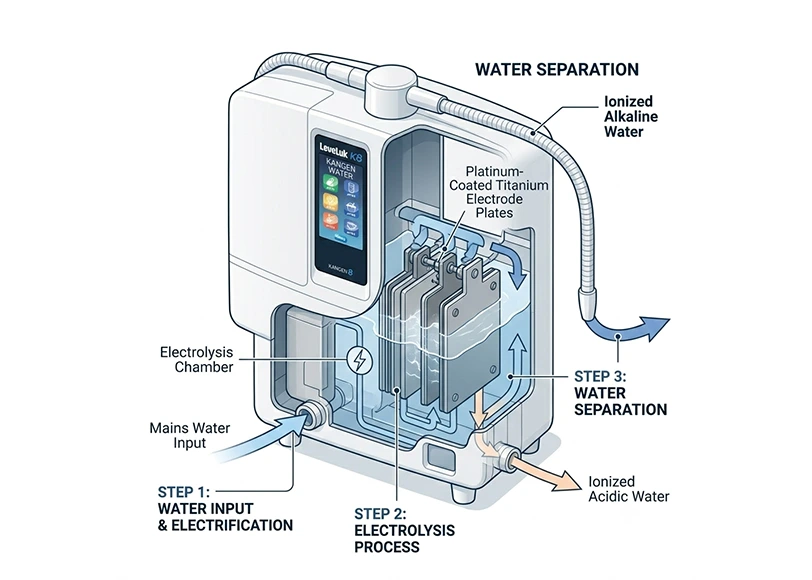
Water ionization occurs through a controlled electrolysis process inside the machine. At its core, the process consists of three key steps:
Step 1: Electrical Current
When water enters the electrolysis chamber, a controlled electrical current is applied to the electrode plates. This causes positively charged ions to move toward the negative electrode, while negatively charged ions move toward the positive electrode, initiating the ionization process.
Step 2: Electrode Plates
The electrolysis chamber contains solid titanium electrode plates coated with platinum. These plates conduct electricity and provide the surface where ionization takes place.
The number and size of the electrode plates influence:
- Water production capacity
- Ionization capacity
- Output stability
- Suitability for different household or commercial usage levels
Step 3: Water Separation
As electrolysis takes place, the water is separated into two streams:
- Ionized alkaline water
- Ionized acidic water
Each type of water exits through a separate outlet, allowing users to select the appropriate setting for different everyday household applications.
Understanding pH Levels (Without Health Claims)
This is a heading
The pH scale measures how acidic or alkaline a liquid is, ranging from 0 to 14:
- pH 7 = neutral
- Below 7 = acidic
- Above 7 = alkaline
Ionized water machines allow users to produce water at different pH levels for various non-medical, everyday uses, such as cleaning, food preparation, or general household applications.
Is Water Ionization the Same as Filtration?
No. These are two different processes:
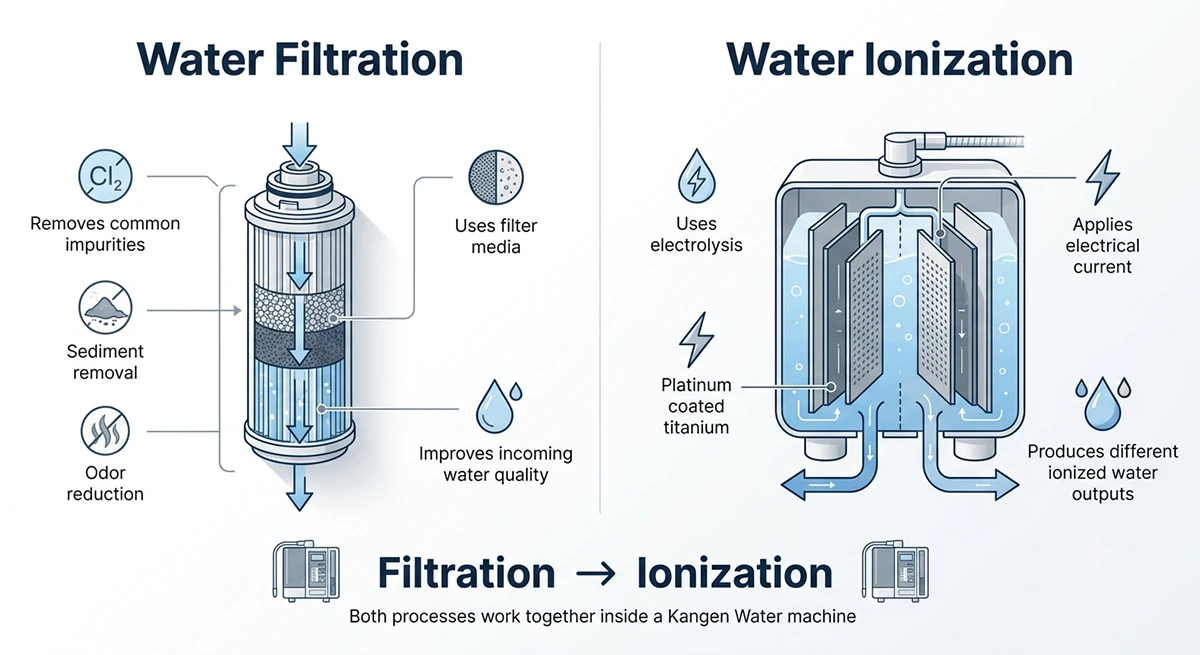
Filtration | Ionization |
|---|---|
Removes impurities | Changes electrical charge |
Uses filters | Uses electricity & plates |
Improves input water quality | Alters water characteristics |
Most Kangen Water machines use both filtration and ionization together.
Why Water Ionization Matters in Machine Selection
Understanding water ionization helps buyers:
- Choose the right machine capacity
- Understand plate count differences
- Match the machine to your daily water needs
This is why ionization knowledge is essential before comparing models.
Learn More About Kangen Water Technology
To continue learning, explore these related guides:
- How Kangen Water Machines Work
- Types of Water Explained
- Compare Kangen Water Machines
- Which Kangen Water Machine Is Right for You?
Each page breaks down a specific part of the technology or buying decision.
Final Thoughts
Water ionization is a well-established technology based on electrolysis and electrical separation. By understanding how ionization works, users can make more informed decisions when choosing a Kangen Water machine—based on usage needs, capacity, and functionality rather than assumptions.
